
Beyond the rock, falls, lake and park
In the Palani Hills above Kodaikanal, tribal hamlets have long lived as one with nature. Their relationship with water, today, can only be described as precarious.
WASHi Field Team
Clean Water for All · · 4 min read
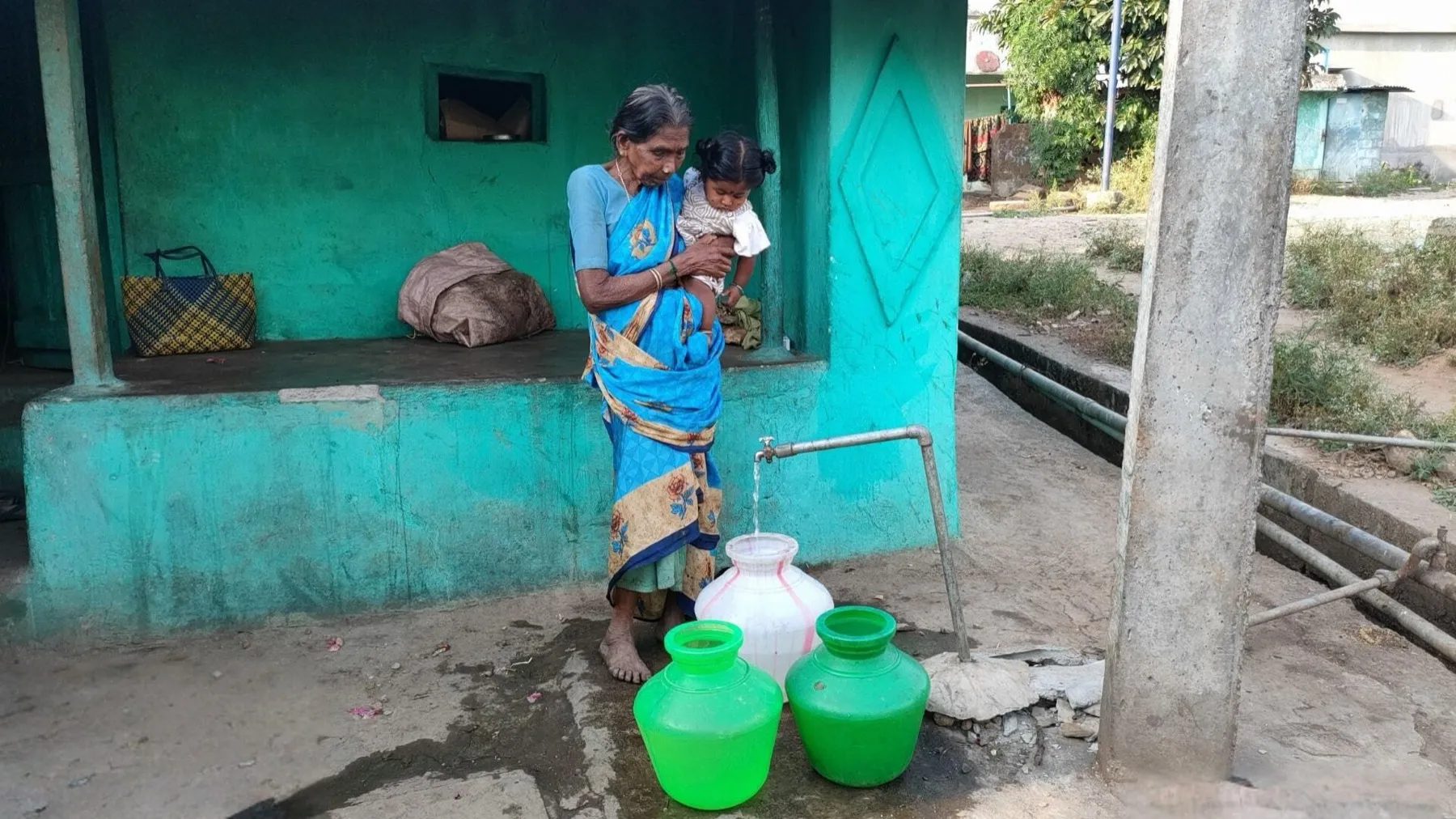
Beyond its misty cliffs, cascading waterfalls, and serene lakes, Kodaikanal cradles an ecosystem bereft of rapid urbanisation and everything it entails. But, no, this isn’t a call for a holiday plan with panoramic views or a spiritual retreat ft. digital detox. It is that side of Kodaikanal that has simply existed beyond the vacationer’s camera, where generations of local tribal communities have lived as one with nature, and built a relationship with water that, today, can only be described as precarious.
For Lakshmi, a resident of one such hamlet in the Palani Hills, the day began before dawn. Before cooking, before work, before the children prepared for school, there was water to collect. Depending on the season, she would walk with other women from her settlement to a spring located along a steep forest path, carrying empty pots that would weigh several kilograms once filled. The journey could take over an hour each way. During summer months, when spring discharge reduced, families often had to make multiple trips or wait their turn at the source. Water collection was rarely undertaken alone. Women travelled in groups, partly to manage the physical burden of carrying water across uneven terrain and partly because movement through forested stretches carried risks associated with wildlife presence. Every container collected was carefully accounted for. Drinking, cooking and livestock needs took priority, while bathing and washing were planned around what remained. If the source appeared muddy after rainfall, the water was allowed to settle before use, and fuelwood was often spent boiling water intended for drinking. For households with limited income, the cost of accessing water was measured not just in distance travelled, but in time, labour, fuel, and opportunities foregone.
Existing dangers of the terrain coupled with the long history of human-animal conflict in the area have turned something that is, in other parts, viewed as a daily chore into a planned event that requires substantial planning and resources. Dispersed settlements and a difficult topography further place a disproportionate burden on women and children. Not only does the time consumed in water collection compromise their participation in education and livelihoods but also makes them highly vulnerable to health risks. For many households, children become active participants in managing daily water needs. During periods of scarcity, older children often accompany parents to collection points or help transport water back to the settlement. The time spent on these activities can coincide with school hours or reduce the time available for studying, rest and recreation. For families balancing livelihood pressures with basic household needs, water collection becomes a shared responsibility, one that can inadvertently affect educational continuity and learning outcomes.
Infrastructure and Systems as they are
- The lack of a planned and managed water system leads to increased runoff, declining spring recharge affecting water availability; untreated source dependance and contamination issues make available water unreliable.
- Pipeline networks are highly susceptible to landslides and vehicular damage. Climatic and terrain conditions further challenge timely and effective repair and restoration efforts.
What WASHi saw
A resilient community that displays a strong commitment and fervour around its water.
“What immediately stood out was the community’s understanding of its water sources. Residents could identify seasonal variations in springs, explain changes they had observed over the years, and describe how rainfall patterns affected local availability. Despite the challenges, there was a strong sense of collective ownership around water. People were already doing everything within their means to protect and conserve the little that was available.”
— A WASHi field team member
For a community that treats water with diligence and care, their biggest challenge remained investing in resource intensive exercises like locating sustainable ground water resources and building and maintaining resilient infrastructure. WASHi, together with the funder’s team of geologists and technical experts, undertook detailed assessments of the local hydrogeology to identify sustainable water sources for the community. The exercise involved studying the area’s geological characteristics, mapping existing water sources, assessing recharge potential, and evaluating the long-term reliability of different source options. In a landscape marked by steep gradients, variable rainfall and infrastructure vulnerabilities, these scientific assessments helped inform the design of a system that could better withstand environmental and operational challenges while improving water security for the community.
Community members were not passive recipients of the intervention; they were active participants throughout the process. Residents shared local knowledge about seasonal water availability, historical spring behaviour and locations that had traditionally served as reliable sources. Their inputs helped validate technical findings and informed decision-making at every stage. Community representatives also supported site identification, facilitated implementation activities and engaged in discussions around long-term management arrangements. As the project progressed, attention shifted towards building local ownership through orientation and capacity-building efforts. Today, responsibility for the day-to-day stewardship of the infrastructure and associated water management practices rests with the community itself, ensuring that the systems established through the project remain rooted in local knowledge, accountability and collective action.